
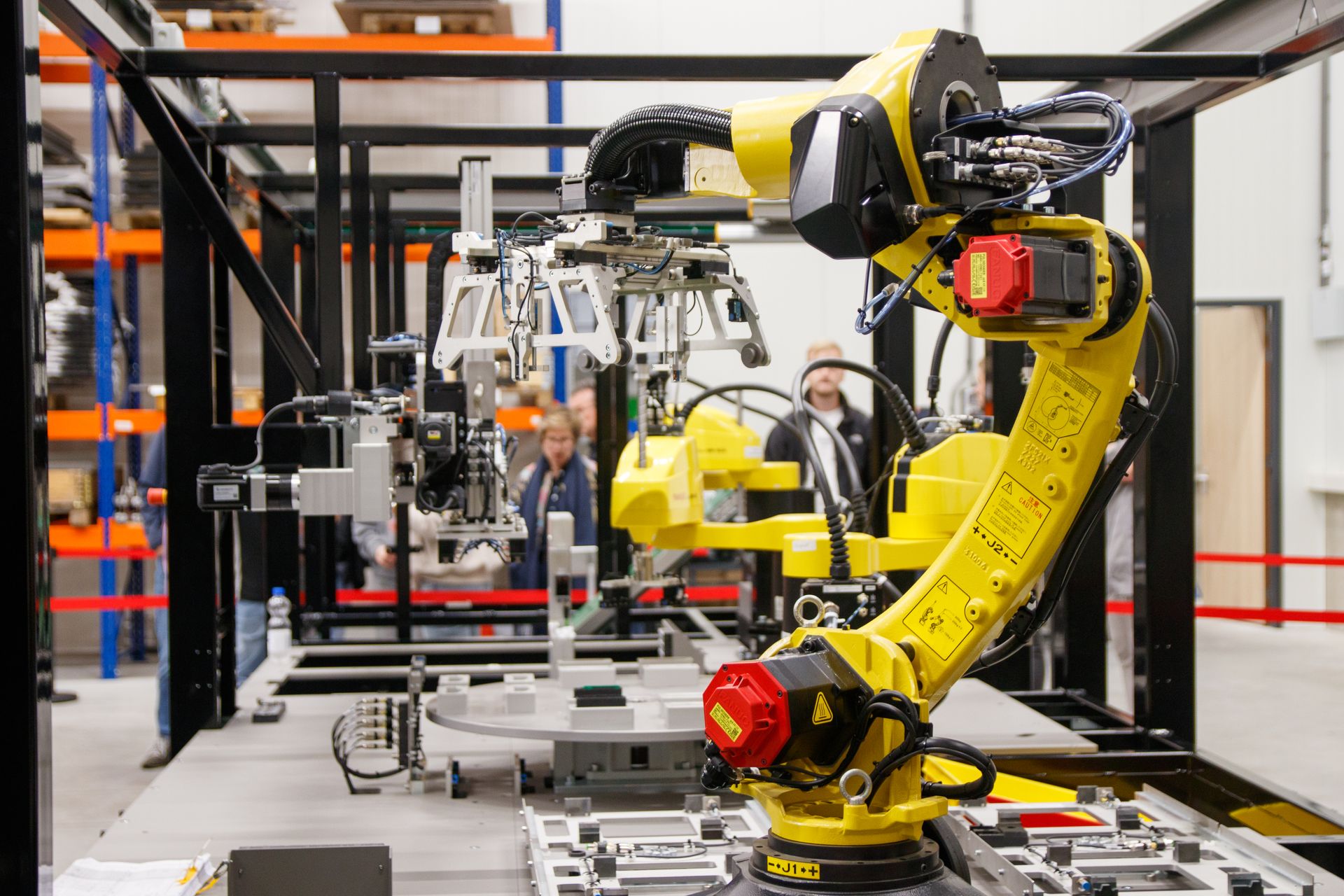
Foundry Robotics has raised an oversubscribed Series A led by Marlinspike Partners to expand a 130,000-square-foot facility in Emeryville, Intelligent CIO North America reported on Oct. 30, 2026. Its FoundryOS software coordinates factory robots across reconfigurable production cells, so a line can be rearranged rather than rebuilt.
The idea answers a real pain. Full retooling is slow, disruptive and hard to reverse. A cell that can be reconfigured for a new product promises flexibility, but only if robots, software, safety systems and material flow actually work as one system.
Flexibility is an integration property, not a robot property.
For Canadian plants, the lesson is not to copy a venture-backed factory. It is to ask, before the next product change, which parts of the current line are fixed by physics and which are fixed only by habit, layout or old programming. That audit, and the automation integration that follows it, is where flexible cells start to pay, line by line and cell by cell, with evidence from the floor rather than promises from a brochure.
Start small: pick one cell, one product changeover, and measure how long reconfiguration really takes, including testing and safety sign-off. If that number falls and quality holds, expand the model. If it does not, the problem is integration, not ambition.