
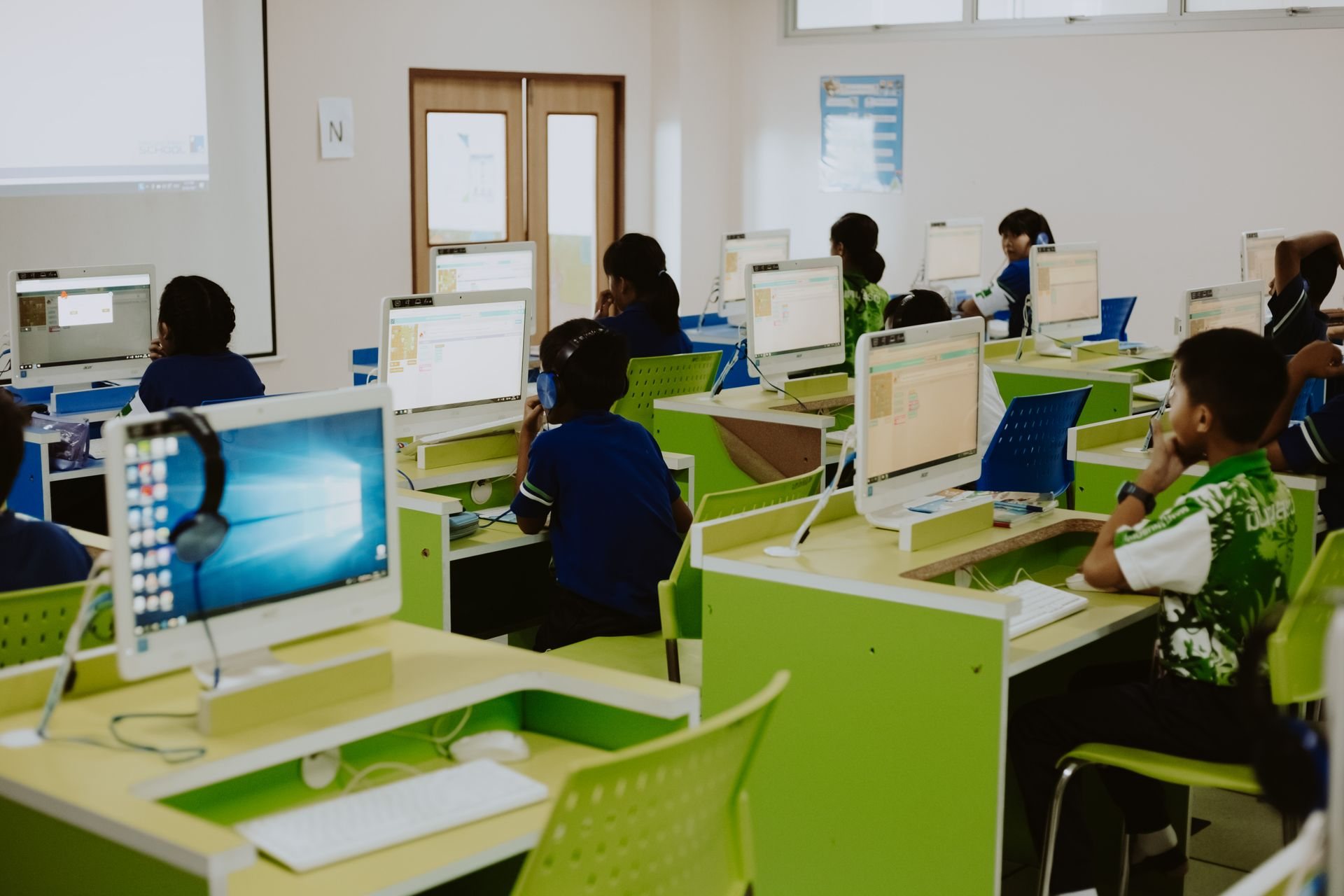
The demand is not the problem. When the Communications Minister toured One Million Coders Programme centres in October, the complaints at Asawase in the Ashanti Region were practical: poor connectivity, limited technical support and equipment, and a need for hybrid options, as TechAfrica News reported on Oct. 13. A second centre for Asawase was announced.
In Ho on Oct. 15, trainees were urged to complete all three levels of the programme — Beginner, Intermediate and Advanced — for better job prospects. And on Oct. 22, the Centre for Economic Research and Policy Analysis added the harder test: the programme should be measured in jobs, income and productivity, not laptops, centres and registrations.
A school lab that produces those outcomes is a system, not a room of computers. Power that survives the school day. Connectivity that holds a class of thirty. Devices imaged the same way, maintained on a schedule, and repaired fast when they fail. A teacher who has support, not just a timetable.
Two duties sit underneath all of it. Student data is personal data under Ghana's Data Protection Act, 2012 (Act 843), and a lab full of children carries safeguarding obligations that have to be designed in — accounts, filtering, supervision and records — not added later.
That is the ground KSPACE works on through InnoLab, the youth innovation programme covered by the June 2026 memorandum of understanding between The Times Group Institute and KSPACE's Klabs studio — a school-to-tertiary programme built on exactly this kind of practical foundation.
If your school or organisation is setting up a lab that has to work every week, not just on launch day, Talk to KSPACE TECHNOLOGIES about building it as a system.