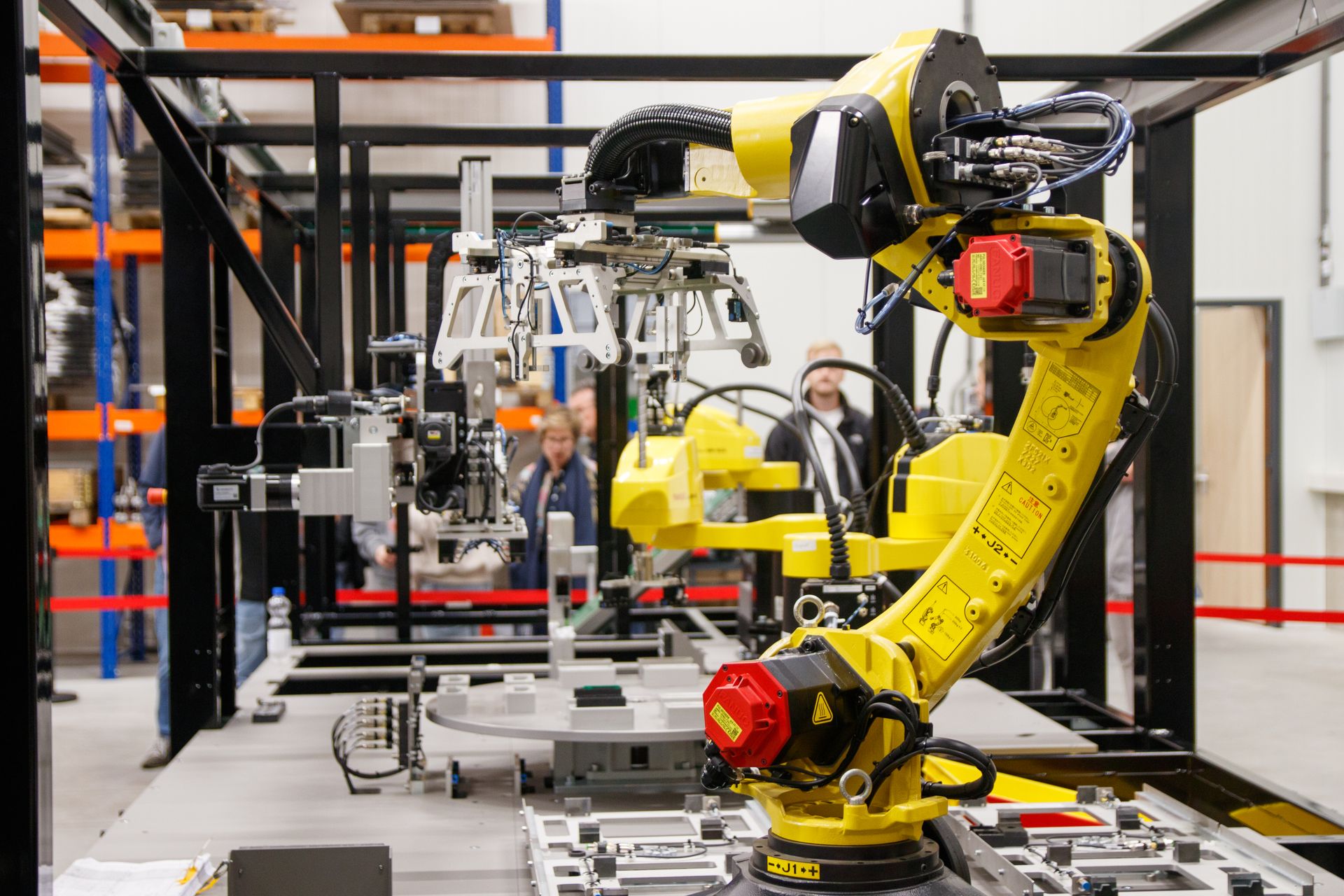
At CIBUS TEC 2026 in Parma this week, Comau and Automha made a pitch that would have sounded unusual a decade ago: buy the whole line from one source. Their joint showcase covered the full run of a food or beverage plant — inbound material management, processing, pick-and-place, packaging, palletizing, automated storage and outbound distribution.
The detail work matched the message. Comau’s new Hygienic Oil robot family uses NSF H1 food-grade lubricants to minimize contamination risk without protective robot covers, and its food-contact robots are certified for food contact — the unglamorous compliance layer that decides what may actually touch food.
The selling point is not any single machine. It is the seams: one party accountable when the line stops, and one data trail from intake to outbound.
In a food plant, the space between two vendors' responsibilities is where production goes to argue — and where traceability goes to die.
Piece-by-piece buying built plants where every vendor's equipment works and the line still fails — at the interfaces, where responsibility blurs and the traceability chain breaks. Single-source offers are the market admitting that integration was the product all along.
When you evaluate automation, count the hand-offs, not just the machines. For every transfer between stages, ask who answers when product stops there. Vague answers are your risk register.